Beyond the Background Character: Anime's Representation Gap and Why It Matters to American Viewers
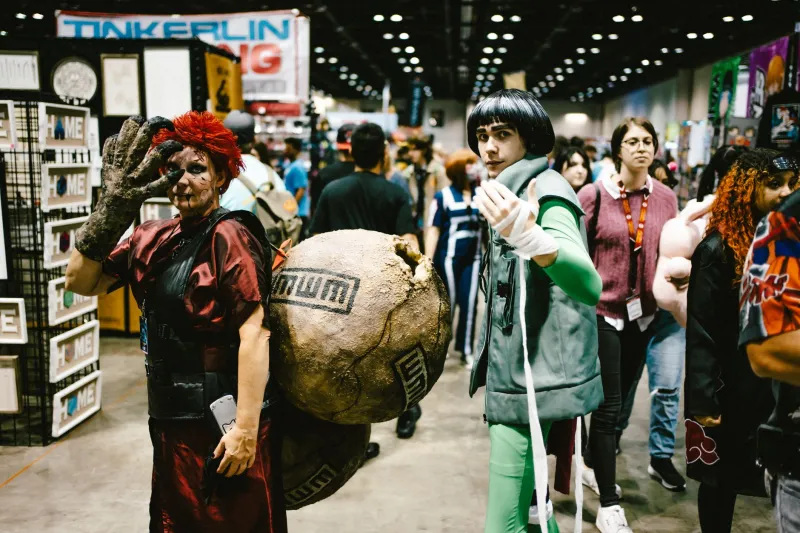
Anime has never been more popular in the United States. Streaming numbers are through the roof, cosplay conventions are selling out across the country, and shows like Demon Slayer and Jujutsu Kaisen are legitimate cultural touchstones. But as the fanbase grows more diverse — and it really has — a persistent tension keeps bubbling up in online spaces: mainstream anime still doesn't reflect the people watching it.
This isn't a new conversation, but it's an increasingly urgent one. When you've got a fanbase that's meaningfully Black, Latino, South Asian, and multiracial, it stings a little harder every time the only dark-skinned character in a show is coded as aggressive, exotic, or comic relief. And when we talk about representation, we're not just talking about skin tone — we're talking about who gets to be the hero, who gets a fully realized story arc, and whose cultural worldview shapes the narrative.
The Trope Problem Nobody Wants to Talk About
Let's get specific. Anime has a long history of leaning on visual and cultural shorthand that doesn't translate well — or ethically — to a global audience. The "dark skin = wild/aggressive" coding is probably the most glaring example. Characters like Kirishima from My Hero Academia or Zora Ideale from Black Clover are coded with darker complexions alongside traits that lean heavily into hypermasculine or impulsive archetypes. It's not always malicious, but intention doesn't erase impact.
Then there's the flip side: the complete absence of certain groups. Walk through a shonen series set in a fantastical world with no particular cultural grounding, and you'll find a cast that's overwhelmingly light-skinned with Eurocentric features. The argument that "it's a fantasy setting" doesn't really hold water when the same fantasy setting consistently centers one aesthetic ideal.
And for American fans specifically — particularly Black American fans, who make up a disproportionately passionate segment of the US anime community — this creates a strange cognitive dissonance. You love the medium. You grew up on it. You've bought the merch, argued about power levels online, and dragged your friends into 100-episode series. And yet the medium rarely loves you back with full, nuanced representation.
Token Characters Don't Cut It Anymore
Here's the thing about token representation: it's actually worse than nothing in a lot of ways. Dropping one melanated character into a cast of twenty and calling it diversity doesn't fool anyone. Fans can smell the checkbox energy from a mile away, and it tends to produce exactly the kind of shallow characterization that reinforces stereotypes rather than dismantling them.
What fans are asking for isn't a quota. It's depth. It's a character who happens to be Black or Latina and also gets a full backstory, a meaningful relationship arc, and motivations that aren't tied to their otherness. It's the kind of writing that treats diverse characters as people first — which, honestly, should be the baseline.
Some series are getting there. Carole & Tuesday — a Shinichiro Watanabe joint, so not surprising — built its entire emotional core around two young women in a future Mars society, with a cast that genuinely reflected global diversity and a storyline that engaged with themes of immigration and political scapegoating. It's not perfect, but it felt intentional in a way that matters.
Yasuke, the Netflix anime about the real-life African samurai who served under Oda Nobunaga, was a landmark moment — a Black protagonist at the center of an anime narrative, not the margins. The show had its pacing issues, but the significance of its existence can't be overstated.
The Creator Pipeline Is Part of the Conversation
You can't fully separate on-screen representation from behind-the-scenes diversity. The anime industry in Japan is notoriously grueling — animators are underpaid, overworked, and the industry pipeline doesn't exactly invite international perspectives. When the overwhelming majority of creative decision-makers are Japanese men working within a fairly insular industry culture, it limits the range of stories that get greenlit and the sensitivity with which certain characters are written.
This isn't a knock on Japanese creators — it's a systemic observation. American studios have the same problem when they fail to hire diverse writers' rooms. Homogeneous creative teams produce homogeneous output. That's not an opinion; it's a pattern.
What's interesting is that global streaming deals — particularly with Netflix and Crunchyroll — are starting to shift this, at least a little. Co-productions and original commissions give platforms leverage to push for more diverse storytelling. Yasuke happened because of that pipeline. Scott Pilgrim Takes Off — okay, that's not anime, but the point stands — showed what happens when you let diverse creative voices shape an adaptation. The results can be genuinely exciting.
What Fans Can Actually Do
Here's where it gets practical. The anime industry responds to money and attention, and American fans have both. Supporting series that do representation well — actually watching them, buying the merch, talking about them loudly online — sends a signal. Streaming algorithms are cold and unfeeling, but they do track engagement.
Fan communities also have a role. Spaces that celebrate diverse fan creators, fanfic writers, and fan artists who reimagine characters or build original stories are doing real cultural work. A lot of the most interesting representation in the anime universe right now is happening in fan spaces, not official productions.
Calling out bad tropes doesn't mean canceling anime. It means holding a medium you love to a higher standard. That's not gatekeeping — that's care.
The Bigger Picture
Anime is one of the most emotionally resonant storytelling formats on the planet. At its best, it makes you feel seen in ways that Hollywood rarely manages. That power is exactly why the representation gap hurts as much as it does — because the potential is right there. The medium is capable of extraordinary empathy and nuance. When it falls back on lazy tropes or erases entire communities from its worlds, it's not just a missed opportunity. It's a failure to live up to what anime can genuinely be.
American fans — especially fans from communities that have historically been sidelined — deserve to see themselves as the protagonist. Not the comic relief. Not the exotic side character. The hero, with all the complexity and humanity that role deserves.
The conversation isn't going away. And honestly? That's a good thing.