Lost in Localization: The Cultural Gap English Dubs Still Haven't Closed
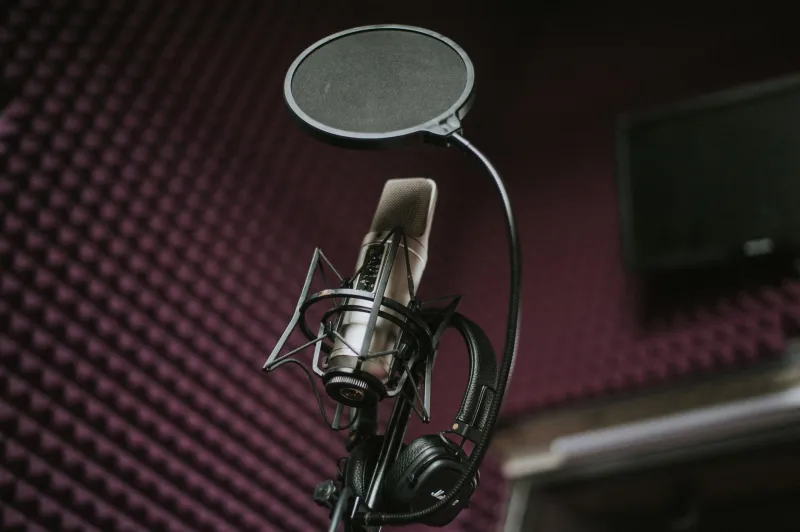
Let's be real — English dubs are in a genuinely good place right now. The voice acting has leveled up, the production budgets have grown, and the days of stilted lip-flap dialogue feel like a distant memory. If you've been sleeping on dubs, there's never been a better time to give them another shot.
But here's the thing nobody talks about enough: technical quality and cultural accuracy are two completely different problems. And while the industry has largely cracked the first one, the second one is still wide open and quietly reshaping how American audiences understand the characters they love.
The Dialect Problem Nobody's Solving
Japanese is a language with enormous regional variation. The difference between standard Tokyo Japanese and Osaka's Kansai dialect isn't just a matter of accent — it carries class associations, personality assumptions, and comedic weight that Japanese audiences absorb instantly. A character who speaks Kansai-ben is often coded as brash, funny, working-class, or street-smart. A character who drops into a rural Tohoku dialect reads as rural or unsophisticated in a specific cultural way. These aren't just quirks. They're identity markers.
English has regional dialects too, obviously. But mapping Japanese regional speech onto American accents is a minefield. Give an Osaka-coded character a Southern accent and you've imported a whole set of American cultural baggage that has nothing to do with the original. Give them a Brooklyn accent and you're in similar territory. Most dub studios just smooth everything into a neutral American English, which technically offends nobody but also erases something real.
Rurouni Kenshin is a classic example. Kenshin's signature speech pattern — his use of "de gozaru" and his archaic, ultra-formal register — signals something very specific about his era, his psychological distance from others, and his deliberate self-erasure. English dubs have tried various approaches over the years, from exaggerated politeness to slightly formal phrasing, but none of them quite land the same way. The character's entire social performance is built on that speech pattern, and flattening it into standard polite English makes him seem quirky rather than haunted.
Honorifics and the Social Architecture They Carry
The honorific debate — whether to keep "-san," "-kun," "-chan" in dubs or translate around them — has been going on for decades, and it's still not settled. The argument for dropping them is accessibility: American audiences shouldn't need a crash course in Japanese social hierarchy to watch a show. Fair enough.
But here's what gets sacrificed. When a character switches from calling someone "-san" to calling them by their first name, that's a relationship milestone. It's the Japanese equivalent of a first hug or a confession of trust. In a dub that's already using first names throughout, that moment just... doesn't exist. The emotional beat evaporates. Viewers who've never seen the subtitled version won't even know what they missed, which is almost the worst part.
Fruits Basket handles this beautifully in its source material. The moment Tohru starts using different name conventions with the Sohma family members tracks her emotional journey in real time. The 2019 dub is genuinely excellent in many ways, but that particular layer of the story is largely invisible to English-only viewers.
When Localization Changes Who a Character Actually Is
Sometimes the cultural flattening goes beyond nuance and starts altering character identity in meaningful ways. Consider characters whose speech patterns signal neurodivergence, social anxiety, or deliberate otherness in the original Japanese. A character who speaks in overly formal or childlike patterns in Japanese is immediately legible to a Japanese audience as someone who doesn't quite fit social norms. Translated into English, that same character might just sound a little odd, losing the specific flavor of their difference.
Or take tsundere characters — already a topic we've explored on Chojo CGA — whose verbal patterns in Japanese are doing a lot of heavy lifting. The specific phrasing of "it's not like I care about you or anything" (betsuni anata no koto nanka ki ni shite nai) is so culturally embedded that it reads almost as a genre convention to Japanese audiences. In English, the same line can come across as mean-spirited rather than emotionally guarded, shifting audience sympathy in ways the writers never intended.
The Gendered Language Problem
Japanese has gendered speech patterns that don't map onto English at all. Women and men are socially expected to use different vocabulary, sentence-ending particles, and levels of formality. When a female character deliberately uses masculine speech patterns in Japanese, it's a statement — about her personality, her defiance of expectations, sometimes her sexuality or gender identity. When a male character uses feminine patterns, it carries its own set of meanings.
English can't replicate this through direct translation. The dub has to find other ways to signal the same thing, and sometimes it does — through vocal performance, through word choice, through attitude. But sometimes it doesn't, and a character who was quietly subversive in the original becomes just another voice in the crowd.
So What's the Fix?
Honestly? There probably isn't a clean one. Localization is always going to involve tradeoffs, and asking a dub to carry every layer of cultural meaning that a subtitled version can lean on Japanese cultural knowledge to convey is asking for the impossible.
But there are approaches that work better than others. Some studios are experimenting with keeping certain terms untranslated while adding context through performance. Others are investing in cultural consultants who can flag when a translation choice is doing more damage than the original problem it was solving. Fan communities — honestly, some of the sharpest cultural critics around — have been pointing these things out for years, and the industry is slowly starting to listen.
The best dubs right now aren't the ones that sound the most natural in English. They're the ones that understand what the original was doing and find creative ways to get the audience there through a different road. That's harder than good voice acting. It requires a genuine understanding of what anime is actually communicating — not just what it's literally saying.
And for American audiences who want the full picture? Honestly, switching between dub and sub for the same show can be revelatory. You start noticing the gaps, and once you see them, you can't unsee them. Which might be the most anime thing that's ever happened to you.