Print or Pirate: How America's Manga Supply Problem Is Driving Fans Underground
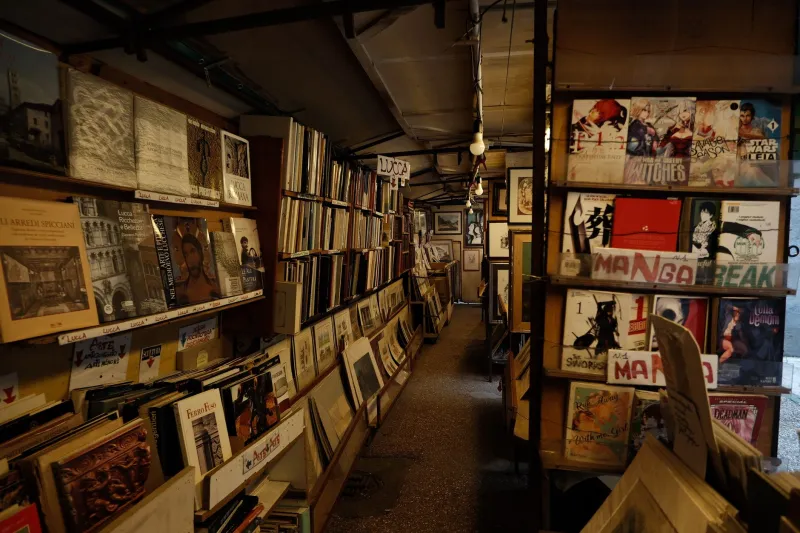
Let's be real for a second. If you've walked into a Barnes & Noble lately looking for a specific manga volume, there's a decent chance you walked out empty-handed. Maybe the shelf had volumes one through four and then jumped straight to eight. Maybe the whole series was just... gone. A sticky note where the stock should be. That experience, repeated across thousands of stores and millions of readers, is quietly reshaping how Americans consume manga — and not in a direction publishers want to talk about.
The US manga market has been on a historic tear. Sales have more than doubled since 2020, and graphic novel charts are now routinely dominated by Japanese titles. That's genuinely exciting. But the infrastructure supporting all that enthusiasm? It hasn't kept up. Not even close.
The Gap Between Demand and Delivery
Here's the basic math problem nobody in the industry seems to want to solve out loud. When a manga series blows up in Japan — think Jujutsu Kaisen hitting peak popularity, or a new arc of One Piece making international headlines — American readers want it immediately. That's just how media works in 2024. You hear about something, you want to experience it now, not in fourteen months.
But the localization pipeline doesn't work that way. A new volume has to be licensed, translated, edited for the English market, sent to print, shipped, and then distributed to retailers. That process can take anywhere from six months to well over a year depending on the publisher's backlog and their printing contracts. Some publishers are doing better than others — Viz Media and Yen Press have both made genuine strides in accelerating their digital release schedules — but print editions remain painfully slow.
And here's the thing that makes this worse: the manga boom caught a lot of publishers genuinely off guard. Print runs that would've been considered generous in 2018 sold out in days in 2021 and 2022. Reprints got ordered. Those took time too. Fans who pre-ordered volumes waited months past their estimated delivery dates. Some just gave up and looked elsewhere.
Where "Elsewhere" Actually Leads
You don't have to dig very deep to find where those readers went. Scanlation sites — websites that host fan-translated manga, often uploaded within days of Japanese release — have been around since the early internet days. For a long time, they existed in a kind of uneasy truce with publishers: fans used them for series that had no English license, and publishers mostly looked the other way because there was no money being lost on unlicensed content.
That relationship has completely broken down. Now scanlation sites are hosting fully licensed, actively selling titles. And the traffic numbers on some of these platforms are genuinely staggering — some estimates put monthly visitors on the largest sites in the tens of millions. A significant portion of those users aren't hardcore pirates ideologically opposed to paying. They're casual readers who got frustrated waiting, Googled the series name, and ended up somewhere they maybe didn't intend to go.
This is the part that should worry publishers most. Habitual behavior forms fast. A reader who spends six months getting chapters for free, on demand, with no friction, is not an easy customer to win back with a $13 paperback that arrives three weeks after Amazon says it will.
The Publisher Response Has Been... Incomplete
To be fair, the industry has noticed. Digital manga storefronts like Manga Plus (run by Shueisha, which publishes One Piece and My Hero Academia) now offer simultaneous English and Japanese chapter releases for many of their biggest titles — for free, legally, with ads. That's a genuinely smart move and it's cut into piracy numbers for those specific series.
But Manga Plus covers a limited catalog. It doesn't help the reader who wants to follow a Kodansha title, or a niche series from a smaller publisher. And crucially, it doesn't solve the print problem at all. Plenty of manga readers specifically want physical volumes. They want something they can hold, display, lend to a friend. The digital fix doesn't reach them.
Some retailers have started experimenting with import editions — Japanese-language volumes sold in the US for readers who can navigate them — but that's obviously not a mainstream solution. A few publishers have explored print-on-demand models, which could theoretically eliminate the out-of-stock problem, but the economics are tricky and the quality concerns are real.
Who Actually Bears the Cost
The uncomfortable truth is that piracy doesn't just hurt publishers — it affects the creators themselves. Mangaka royalties are tied to licensed sales. When a reader grabs a scanlation instead of buying the official release, the artist sees nothing. In a system where many manga creators are already working brutal schedules for modest pay, that matters.
American fans generally care about this when they think about it. The problem is that the system doesn't make it easy to care in a practical way. If you want to support a creator and the official English release is unavailable, backordered, or months behind where the story currently is, what exactly are you supposed to do? The answer the industry keeps not providing is a real one.
What Actually Needs to Change
Industry observers have been pretty consistent about the fixes that would make a dent. More simultaneous digital releases across a wider range of publishers. Better print run forecasting that treats manga as the mainstream product it now is rather than a niche category. Clearer communication with retailers about reprint timelines so fans aren't just guessing. And honestly? More transparency with readers about why delays happen and what's being done.
The manga audience in the US is enormous, enthusiastic, and — this part is important — largely willing to pay. These aren't people who are opposed to supporting the industry. They're people who've been given a friction-filled, inconsistent experience and found a frictionless alternative. That's a solvable problem. It just requires treating the American manga reader as someone worth solving it for.