The Comeback Shelf: How 'Dead' Manga Is Making Publishers a Ton of Money Right Now
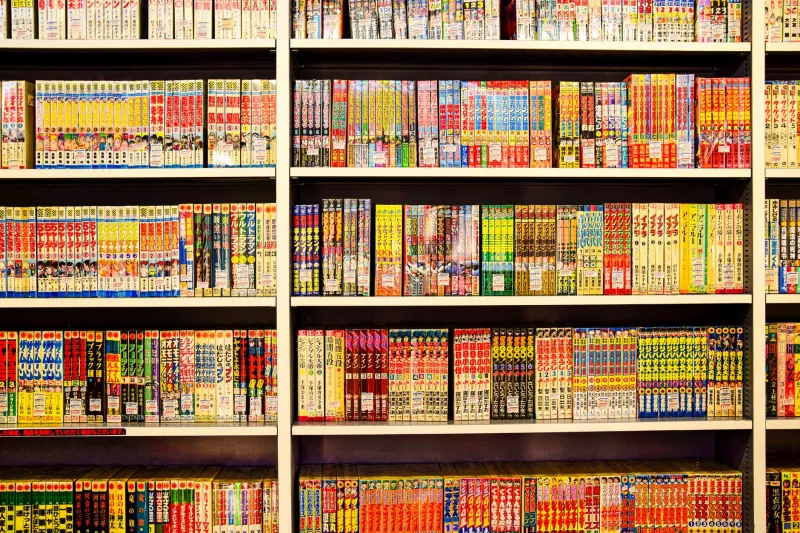
There's a volume of manga sitting in a Barnes & Noble somewhere in America right now that, five years ago, its publisher had basically written off. It sold okay when it launched. Not great. The series wrapped without much fanfare, got shelved in the back catalog, and largely disappeared from the conversation. Nobody was actively promoting it. Nobody was reordering it.
Then somebody on TikTok read it.
And now it's in its fourth reprint.
This is the backlist boom — and if you pay any attention to manga retail, you've probably already felt its effects without necessarily knowing what to call it. Older series are moving again. Publishers are going back to press on titles they hadn't touched in years. And the economics of manga publishing in America are quietly being rewritten in real time.
What We Mean by 'Backlist'
In publishing, the backlist is everything that isn't new. It's the catalog — the titles that have already had their launch moment and are now just sitting there, available for sale but not actively marketed. For most of publishing history, the backlist has been a quiet revenue stream: reliable but not exciting, the kind of thing that keeps the lights on while the frontlist (new releases) gets all the attention.
Manga has always had a slightly different relationship with its backlist because of how the format works. A completed series stays on shelves indefinitely, and readers who discover volume one will typically buy through the whole run. That built-in completionist behavior makes manga backlist more valuable than, say, backlist fiction. But for years, discovery was still the bottleneck. How does someone find a completed series from 2011 if nobody's talking about it?
Enter BookTok.
The Algorithm Did Something Publishers Couldn't
TikTok's BookTok community has been credited with reviving interest in everything from literary fiction to YA romance, and manga is absolutely part of that story. The difference is that BookTok operates outside the traditional publishing promotional cycle entirely. A creator doesn't need a publisher's marketing budget or a new release to talk about a book. They just need to love it and say so on camera.
For manga, this has been transformative. Series like Dungeon Meshi (known in the US as Delicious in Dungeon) saw their backlist volumes suddenly impossible to find in stores well before the anime adaptation dropped, driven largely by social media word of mouth. But the phenomenon isn't limited to titles that eventually got anime adaptations. Plenty of completed, anime-free manga series have experienced genuine revivals based purely on reader recommendations spreading through short-form video.
Kimi ni Todoke, a shojo series that originally ran from 2005 to 2017, started showing up in BookTok recommendations around 2022 and has reportedly seen meaningful sales increases since. Nana by Ai Yazawa — technically still on hiatus and deeply beloved by a certain generation of readers — has become almost a rite of passage recommendation on manga-focused accounts, introducing the series to readers who weren't born when it started. Publishers are reprinting volumes to keep up.
Changing Retail Strategies Are Part of the Story Too
It's not just social media doing the heavy lifting here. How manga gets sold in America has changed significantly over the past few years, and those changes are creating conditions where backlist can thrive in ways it couldn't before.
Amazon's recommendation engine has gotten genuinely good at surfacing older titles to readers who just finished something similar. A reader who buys the first volume of a popular new shojo series will find completed older series in their recommendations almost immediately. The long tail of e-commerce, which physical retail was never set up to handle well, is ideally suited to backlist discovery.
Meanwhile, independent bookstores — which have actually grown in number over the past decade despite what you might expect — tend to stock with more editorial intention than big-box retail. An indie bookseller who loves manga will hand-sell a 2009 series to a customer who's never heard of it. That kind of recommendation carries serious weight, and it's contributing to backlist movement in ways that are hard to quantify but very real.
Libraries deserve a mention here too. American public libraries have dramatically expanded their manga collections over the past five years, and library circulation is a legitimate discovery pipeline. A reader who checks out an older series from the library and falls in love with it will often buy their own copies. Publishers have started paying closer attention to which backlist titles are circulating heavily in library systems.
What Publishers Are Actually Doing About It
The savvier publishers have noticed all of this and are starting to act on it. Rather than treating backlist as passive revenue, some are actively mining their catalogs for titles worth re-promoting. That might mean a social media push timed to an anniversary, a new omnibus edition that repackages older volumes at a more accessible price point, or updated cover designs that signal to new readers that a series is worth their time.
Viz Media, Yen Press, and Kodansha USA have all experimented with catalog promotions in recent years. Omnibus editions — which bundle multiple volumes together at a discount — have become a particularly effective backlist strategy because they lower the barrier to entry for new readers and are easier for retailers to stock and display than long runs of individual volumes.
There's also a growing awareness that a new anime adaptation is the ultimate backlist activation event, and publishers are positioning their catalog titles accordingly. When Dungeon Meshi got its anime announcement, Yen Press was ready. When older series get surprise adaptations or even just significant mentions in popular YouTube video essays, the publishers who have those catalogs in good shape are the ones who benefit.
What This Means for Your Reading List
Practically speaking, this is a great moment to go hunting in the backlist. If you've been sticking to new releases and currently running series, you're missing a genuinely vast library of completed stories that are now easier to find than they've been in years.
Some places to start digging: look at what the manga-focused BookTok and BookTube communities are calling "underrated" or "slept on." Check what your local library is circulating. Ask a bookseller at an indie shop what they'd recommend from the back shelves. You might be surprised what's been waiting there for you.
The manga that 'failed' ten years ago didn't fail because it was bad. It failed because nobody knew it existed. That's changing — and honestly, it's one of the more exciting things happening in the American manga market right now.