Color War: Why Fan Colorists Are Beating Official Publishers at Their Own Game
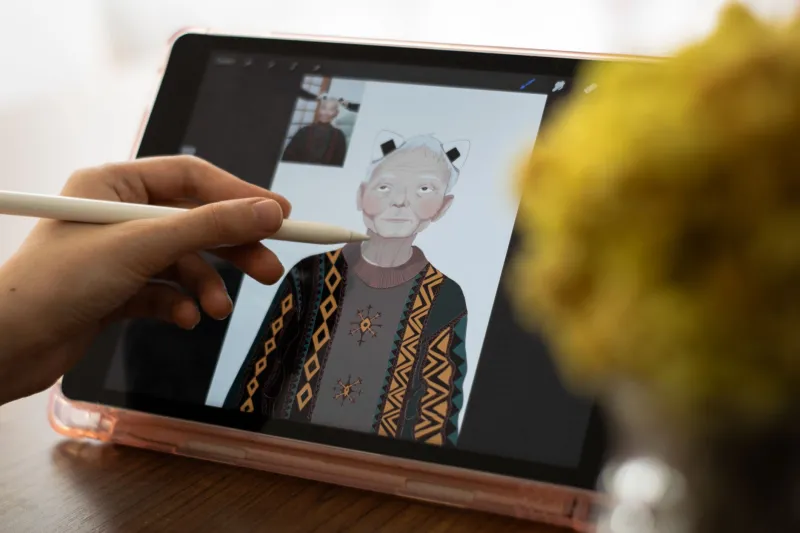
There's a version of Jujutsu Kaisen floating around the internet right now that looks like it was painted by a professional studio. Gojo's six eyes glow with an almost supernatural blue. The cursed energy crackles in shades that Gege Akutami's original black-and-white pages could never convey. The person who made it? A 23-year-old in Ohio with a Wacom tablet, a Patreon account, and a deep, borderline obsessive love for the series.
This is the manga coloring scene in 2024 — decentralized, fast-moving, and increasingly difficult for traditional publishers to ignore.
The Speed Problem Nobody Wants to Talk About
Official colored manga releases do exist. Shonen Jump has rolled out colored digital editions for titles like My Hero Academia and One Piece, and Viz Media occasionally packages colored volumes for Western shelves. But the pace is glacial compared to what fan communities are producing.
By the time an official colored edition gets commissioned, licensed, printed, and shipped to a Barnes & Noble in suburban Atlanta, fan colorists have already covered hundreds of chapters. They're not waiting on licensing negotiations or international publishing windows. They're just... doing it. Chapter drops on Wednesday, colored fan versions hit Reddit by Saturday. That turnaround is something no traditional publisher can realistically compete with.
And speed isn't the only advantage.
Aesthetic Choices That Actually Land
Here's the thing about official colored editions — they're often fine. Serviceable. Safe. The coloring tends to follow a fairly conservative visual language: clean gradients, standard shading, palettes that won't offend anyone. That's not a knock on the artists doing the work, it's just the reality of corporate creative direction.
Fan colorists don't have those constraints. They're making choices based purely on what feels right to them as readers who are emotionally invested in the material. That leads to some genuinely stunning artistic decisions — moody, high-contrast lighting for psychological horror moments in Chainsaw Man, warm golden tones for nostalgic flashback sequences in Vinland Saga, brutal desaturation during the heaviest scenes in Berserk.
A lot of readers, especially younger American fans who grew up with color-saturated media, are responding to that emotional specificity in ways that official releases just haven't triggered.
The Copyright Elephant in the Room
Let's not pretend this situation is uncomplicated. Fan colorists are working with copyrighted material without authorization. Publishers own the source pages. Legally, this is murky at best and straightforwardly infringing at worst, depending on how the work is distributed and whether money changes hands.
Some colorists run Patreons where supporters pay for early access to colored chapters — which adds a commercial dimension that makes the legal exposure significantly more serious. Others distribute freely, framing it purely as fan art and community contribution. Publishers have sent cease-and-desist letters in the past, though enforcement is inconsistent and often feels like a game of whack-a-mole.
The creators themselves have mixed feelings. Some mangaka have expressed genuine appreciation for fan coloring projects, seeing them as evidence of deep community engagement. Others have stayed silent. Very few have publicly condemned the practice outright, which tells its own story.
Why American Readers Are Especially Hungry for Color
This is a cultural gap worth examining honestly. In Japan, black-and-white manga is the dominant format and has been for decades. It's not a limitation — it's an aesthetic tradition with its own visual grammar, one that Japanese readers are deeply fluent in. The absence of color carries meaning. Negative space does work. Ink weight tells you everything.
American readers, even those who've become serious manga fans, are often coming from a comic book tradition where color is standard, or from anime where color is obviously central. The adjustment to black-and-white isn't impossible — millions of Western fans have made it happily — but there's a segment of the audience for whom color genuinely unlocks accessibility. It's not a lesser way to read. It's just a different entry point.
Fan colorists are serving that audience. Official publishers have been slower to recognize how large that audience actually is.
What Publishers Are (Slowly) Starting to Learn
The good news is that the industry isn't completely asleep. Viz Media has expanded its digital colored offerings. Jump+ has experimented with color presentation for certain series. Some publishers are watching which fan-colored series generate the most engagement and using that data — quietly, without admitting it — to prioritize which titles get official color treatment.
There's also a broader conversation happening about whether colored digital manga could become a meaningful revenue stream rather than a niche offering. If a fan colorist can build a Patreon with thousands of subscribers by coloring Demon Slayer chapters, that's a market signal that publishers are leaving money on the table.
The smarter move — and some publishers are edging toward this — would be to bring talented fan colorists into official pipelines. Commission them. License their color work. Turn a copyright headache into a community partnership. It's happened in adjacent creative industries before.
The Bigger Picture
What the manga coloring phenomenon really reveals is a gap between how content is being consumed and how it's being delivered. American manga readers are hungry, creative, and increasingly capable of producing high-quality material themselves. When official channels move slowly or make conservative creative choices, communities fill the void.
That's not a threat to manga as an art form. If anything, it's proof of how deeply these stories have taken root. People don't spend forty hours coloring a chapter of Vinland Saga because they're indifferent to it. They do it because the story matters to them on a level that demands more than passive consumption.
Publishers who figure out how to work with that energy rather than against it are going to be in a much stronger position than those still drafting takedown notices.