Right to Left, Front to Back: How American Manga Readers Are Quietly Reshaping the Art Form
Remember the first time you picked up a manga and had absolutely no idea what was happening? You flipped to the first page and got what looked like an ending. Someone's friend group at school pointed at the back cover and laughed. You turned the book around, started over, and eventually — somewhere around chapter three — your brain just clicked into the rhythm of it.
That learning curve used to be a real barrier. Today, for a significant chunk of American readers under 25, it basically doesn't exist anymore. Gen Z picked up manga in middle school, mainlined it through the pandemic, and now reads right-to-left as naturally as they scroll TikTok. And that shift? It's doing something interesting to the stories being told.
The Format Was Never Just a Technicality
It's easy to think of manga's right-to-left orientation as a purely logistical thing — a cultural artifact of Japanese reading conventions that Western publishers just had to accommodate. But the format is deeply embedded in how manga storytelling actually works.
The direction you read affects which visual information hits you first on any given page. It shapes the rhythm of panel transitions, the way action sequences build momentum, and how emotional beats land. When early American publishers like Tokyopop started releasing "flipped" manga — mirrored to read left-to-right — Japanese creators sometimes pushed back hard. Akira Toriyama famously objected to flipped editions of Dragon Ball because the reversal changed the visual flow of fights and expressions in ways that felt wrong to him.
Reading manga in its original orientation isn't just about cultural authenticity. It's about experiencing the story as it was architecturally designed to unfold.
What Fluency Actually Looks Like
What's changed in the last decade isn't just that more Americans are reading manga — it's that they're getting genuinely fluent in its visual grammar. That means understanding not just the reading direction but the conventions: the way speed lines create kinetic energy, how screentone shading signals mood, the specific shorthand of sweat drops and dramatic close-ups, the way a silent page can carry more weight than three pages of dialogue.
This fluency is showing up in some unexpected places. American comic artists who grew up reading manga are increasingly incorporating its conventions into their own work — not as imitation but as a genuinely internalized visual vocabulary. The success of original English-language manga-style titles on platforms like Webtoon and Tapas reflects a readership that's comfortable with the format and actively seeking it out.
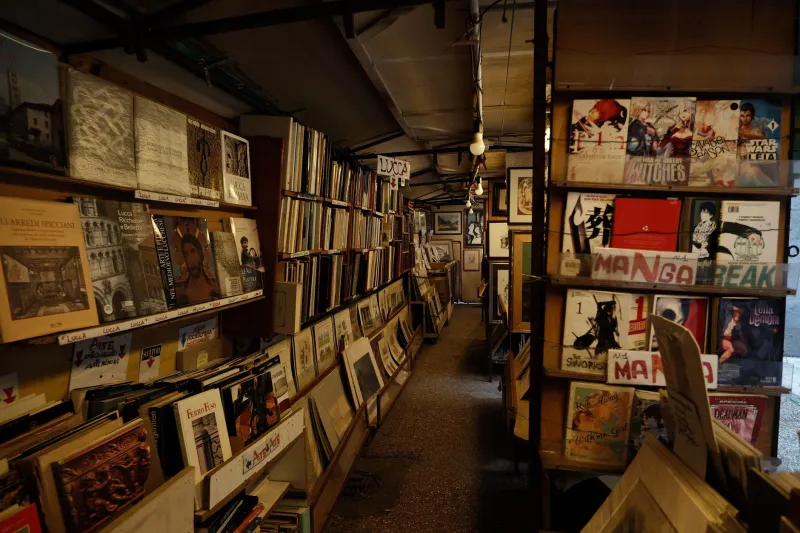
Bookstores are noticing too. Manga sections at Barnes & Noble have expanded dramatically, and titles like Spy x Family, Chainsaw Man, and Jujutsu Kaisen move in volumes that would have seemed impossible for the category fifteen years ago. Publishers aren't just importing more — they're investing more in how they present and market the format to an audience that no longer needs hand-holding.
Are Creators Designing for Western Eyes?
Here's where things get genuinely interesting — and a little complicated. As the American manga market has grown into something publishers can't ignore, questions have started circulating about whether some creators are now structuring their work with Western audiences in mind.
The evidence is mostly indirect, but it's there. Some newer manga series feature more explicit chapter-by-chapter recap structures that feel tailored for serialized online reading, which skews heavily international. Certain titles seem to frontload accessible world-building in ways that feel calibrated for readers who might not have the context that a Japanese audience would bring automatically.
Then there's the Webtoon phenomenon. Korean webtoons — vertical-scroll comics designed for smartphones — have exploded in American popularity, and many of them are explicitly engineered for global audiences from the ground up. The pacing is different, the chapter lengths are different, the visual density is different. Some manga publishers are watching that model closely.
"There's definitely more awareness of international readership in editorial conversations than there was ten years ago," one translation editor noted in a publishing industry roundtable. "It's not that stories are being changed for Western audiences, but there's more thinking about accessibility."
The Authenticity Question
Not everyone is comfortable with this trajectory. Some longtime fans and critics worry that as manga becomes more globally calibrated, something essential about the form gets smoothed away. The idiosyncratic pacing of a series like Berserk or the dense cultural specificity of Gintama isn't a bug — it's a feature. Those works demand something from their readers, and that demand is part of why they've built such passionate, devoted audiences.
There's a version of this conversation that's just gatekeeping in a different outfit. But there's also a legitimate aesthetic concern worth taking seriously: when any art form starts optimizing heavily for the broadest possible audience, it can lose the edges that made it interesting in the first place.
The counterargument is that manga has always been a diverse, sprawling medium. There's room for globally accessible entry points and for challenging, culturally dense work. The American market getting bigger doesn't necessarily mean the complex stuff disappears — it might just mean it finds its audience more slowly.
What This Means for the Stories You're Reading
If you're a regular manga reader, the practical upshot is actually pretty exciting. More American fluency in the format means more sophisticated conversations about craft, more demand for quality translations that preserve tonal nuance, and a market robust enough to support a wider range of titles getting localized.
It also means the barrier between "manga for beginners" and "manga for serious readers" is collapsing. A fifteen-year-old picking up their first volume of Dungeon Meshi today has access to community resources, translation notes, and cultural context that would have taken years to accumulate in the early 2000s.
The format that once felt alien to American readers has become, for a generation, just the way certain stories are told. That's not a small thing. It's a genuine shift in how a country reads — and it's only going to keep reshaping what gets made and how.